Showing posts with label Recipes sweets. Show all posts

Sunday, March 16, 2008

Sachertorte...


Well, I was reading the original recipe (! almost) for Sachertorte and I have to try it. It's like a chocolate mousse made into a cake and filled with apricot jam and topped with a chocolate casing sauce.
It has to be fluffy. The chocolate and eggs have to be the best you can find, as for the apricot jam, homemade preferably and the rest is all up to you and your skills.
Have fun. It is a good cake for breakfast or tea.

Monday, February 18, 2008

And what about some Smoked Bacon and Egg Ice Cream, Pain Perdu, and Tea Jelly ?

A burst of flavour

Boil it, fry it, braise it or roast it: you don't have to be a rocket scientist to recognize that how you prepare and cook any ingredient will affect just how much of its integral taste will remain in the finished dish

Heston Blumenthal
Saturday June 1, 2002

Guardian

Flavour encapsulation sounds like something in a sci-fi film, but it is, in fact, a vital element in both food manufacturing and my cooking. So what is it? The best way to explain it is with what I call my coffee bean theory. Make a cup of coffee with one ground coffee bean - it will taste horribly insipid. Now take the cup and fill it with hot water; just before you drink it, pop a coffee bean into your mouth, crunch it and then drink the water. This time, the coffee flavour will be far stronger and last in the mouth a lot longer. The experiment shows that a coffee bean delivers a far greater flavour eaten whole than when ground up in a cup of hot water. Effectively, the flavour is encapsulated in the whole bean but dispersed in the water.

This approach is used extensively in food manufacturing, in many cases probably unintentionally. Think about a bar of milk chocolate with nuts and raisins in it - their flavour is invariably encapsulated within the bar. If the nuts and raisins were puréed and mixed into the chocolate, they would not provide anywhere near the same flavour.

The same applies to marmalade - it wasn't so long ago that it was marketed as containing "real" orange pieces, as perfect an example of flavour encapsulation as you could wish for. I apply the approach extensively in the restaurant because it's an essential tool in the crusade against palate fatigue. (I'll talk more about palate fatigue in future articles, but in essence it's when you become bored with what you eat.)

Recipes serve four.

Bacon and egg ice cream

This forms part of a dessert served at the restaurant. It's a twist on breakfast: caramelized brioche in place of toast, tomato and red pepper compote for jam, chewy salted butter caramel with wild mushrooms, and this ice cream, all washed down with a small cup of jellied Earl Grey. The idea stemmed from thinking about why some ice cream tastes of egg. I came to the conclusion that it's because the custard is overcooked. When you cook custard, the heat makes the proteins in the egg coagulate, which thickens the mix. If you continue cooking the custard, it will scramble, with the proteins completely clumped together. Egg yolk sets at 72C. So, by cooking the custard to 82C or more, as advised in many traditional recipes, the proteins begin to coagulate. Although the custard may still look liquid, tiny clumps of protein will have formed. And so, according to the coffee bean theory, the custard will be full of little bursts of egg flavour.

All of which got me thinking about how to exploit this eggy flavour, and so this recipe was born. The other parts of the dessert (bar the caramel/mushroom dish) follow, because the ice cream needs them to deliver the full impact of the breakfast dessert. And yes, you do need this many egg yolks; use the whites to make the chocolate fondant from the March 9 issue. These quantities make around one liter.

300g sliced streaky smoked bacon
1 litre full fat milk
25g skimmed milk powder
24 egg yolks
50g liquid glucose
175g unrefined caster sugar

Roast the bacon in an oven at 180C until slightly browned. Place in cold milk and leave to marinate overnight. Tip the milk and bacon into a casserole, and add the milk powder. Put the egg yolks, glucose and sugar in a mixing bowl and, using an electric whisk, mix at high speed until white and increased in volume.

Heat the milk and bacon mix to simmering and, with the whisk still going, pour a little on to the yolks. Tip this back into the milk pan, and cook over a lowish heat until it hits 85C. Hold at this temperature for 30 seconds, then remove from the heat. Cool the mixture down by stirring it over ice, tip into a blender and liquidize until smooth. Pass through a sieve and churn.

Caramelised brioche

The breakfast toast in the dessert, but also delicious served with caramelized apples, bananas or chocolate sauce.

1 dssp unrefined caster sugar (plus 20g or so extra for dusting)
250ml whole milk
2 soupspoons white rum (optional)
3 eggs
75g unsalted butter
1 loaf brioche

Mix 1 dssp sugar, milk, rum and eggs in a bowl. Clarify the butter, heating it gently in a pan or microwave. When melted, leave to stand for 10 minutes. Carefully scrape off the white skin that forms on the surface and discard it. Pour the clarified butter through a fine sieve or tea strainer.

Heat the butter in a frying pan. Dip the brioche in the milk/sugar mix for a minute or so, then place in the hot pan. Cook, turning regularly, until lightly colored. Sprinkle with the extra sugar and caramelize lightly before serving.

Tomato and red pepper 'jam'

5 ripe tomatoes
1 red pepper
50g icing sugar
Splash of Worcestershire sauce
Splash of white-wine vinegar
10ml olive oil
2 coffee beans

Blanch, peel, deseed and dice the tomatoes. Peel, deseed and dice the pepper. Put everything in a pan and marinate for 24 hours. Cook very slowly on a low heat, until dry and jam-like.

Tea jelly

Of course, you do not need to use all of these different teas - amend as you wish.

250ml water
45g unrefined caster sugar
1 green tea bag
1 lemon verbena tea bag
2 Earl Grey tea bags
10-15ml lemon juice
2 gelatin leaves
5g citric acid (optional)

Bring the water and sugar to the boil, and remove from the heat. Add the tea bags, stir gently and leave to infuse for five minutes. Strain through a fine-mesh sieve and add the lemon juice. Meanwhile, soften the gelatin in cold water. When soft, gently squeeze out the water and add the gelatin to the warm tea (along with the citric acid, if using). Stir until the gelatin has dissolved, then pour into cups and refrigerate until set.

guardian.co.uk © Guardian News and Media Limited 2008

Monday, February 11, 2008

beaualalouche blog: Macarons de Pierre Hermé

Recette de Pierre Hermé, Larousse du chocolat

J’ai obtenu 60 macarons de 4-4,5 cm de diamètre environ

1ère étape : faire la ganache au chocolat

300g de beurre mou
320g de chocolat noir
220 mL de lait

Écraser le beurre à la fourchette et le malaxer jusqu’à ce qu’il devienne mou et onctueux.
Hacher le chocolat, le mettre dans un saladier.
Porter le lait à ébullition, en verser un peu sur le chocolat, mélanger doucement et ajouter ainsi le reste du lait.
Quand le mélange a tiédi, ajouter petit à petit le beurre mou, mélanger doucement sans trop travailler la pâte pour garder une texture moelleuse.

Mettre un film sur le saladier et conserver la ganache au frais.

2ème étape : préparer les macarons

480g de sucre glace
280g de poudre d’amande
40g de cacao en poudre non sucré
7 blancs d’œufs

Tamiser le sucre glace avec le cacao.
Hermé préconise de tamiser aussi la poudre d’amande, pour moi ça ne marche pas, ce ne passe pas à travers le tamis alors en fait, je passe la poudre au mixer pour qu’elle soit encore plus fine.
Mélanger le tout.
Monter les blanc en neige, y incorporer délicatement le mélange cacao-sucre-amande.

Remplir la poche à douille de cette pâte et répartir des ronds de 4 cm de diamètre (ou plus ou moins selon le résultat attendu) sur une plaque de four tapissée de papier sulfurisé.
A noter : la première fois que j’ai fait des macarons, je n’avais pas de poche à douille, j’ai fais mes tas de pâte à la petite cuillère et ça avait vraiment très bien marché.

Laisser reposer 15 min à température ambiante et préchauffer pendant ce temps le four à 140°C (thermostat 4-5).

3ème étape: la cuisson

Enfourner et laisser cuire 15 min (ça c’est pour les macarons d’à peu près 4 cm de diamètre, ensuite il faut adapter) en maintenant la porte du four entrouverte grâce à une cuillère en bois (pour éviter que la surface des macarons craquelle).

Sortir du four, soulever un coin de papier sulfurisé et faire couler un filet d’eau froide sur la plaque. Cela permet de décoller facilement les macarons. Les laisser refroidir sur une grille.

Vu la quantité, il faut faire plusieurs fournées, je conseille de re-mélanger la pâte à chaque fois avant de remplir votre poche à douille.

4ème étape : assemblage

Garnir la base plate d’un macaron avec la ganache et poser un autre macaron dessus.
Disposer les macarons ainsi obtenus dans un plat, couvrir de papier film et essayer de les laisser deux jours au frigo avant de les croquer…


Mais moi je préfère de les manger tout suite


img_0633

Sunday, February 04, 2007

Dom Rodrigo, sweet thing, portuguese traditional.

These are egg yolks stringed and cooked inside a light sugar syrup.
We call these "fios de ovos".


And this is what it will fill the little nest of 15 grms "fios de ovos", it is made with finely grounded almond, sweet and bitter ones, then almost caramelized, egg yolks added after this and cooked until it all becomes a nice soft cream like this one.


that's how it looks when they are mixed in a little ball, but it's not ready yet...


Now, cook some sugar and a bit of water to make this nice syrup,


roll each delicacy in it, but just enough to cover the little delight as this helps it to continue moist inside, among other things.

Gently, place it on a square of waxed paper to rest.


sprinkle it with icing sugar and grounded cinnamon.

That's how it looks like when you eat it. The original, as this one, is quite sweet and strong flavored, should be taken with a stong expresso coffee without no sugar added, or as Paulo, our sommelier well suggested, with a bitter almond liquer with some lemmon drops inside and ice cubes, and the coffee after or before, as you wish.

Fold silver foil and make a nice package, the usual is in the form of a pyramid, well like a pyramid, almost. I like to make other forms and this time we tried this one.

(that's me, the fat cook, but not for long, i'm on a diet!)


Tadaaaaaammmmm !

I have to make them less sweeeeet and maintain all the flavours and textures to make it available to the common mortals, but that's another recipe....

Have fun with the DOM RODRIGOS ! A delicacy from the south of Portugal, here where we are, in the Algarve region ! Almond trees, lots of 1st class chicken eggs and the sugar and spice given to the monasteries as payment, made the monks or nuns create this marvel, some centuries ago.
No excuse now, you can enjoy it as well, in your own home.

to make 16: 240 g "fios de ovos"; 100 g sugar; 60 g grounded almond; 10 egg yolks; syrup; icing sugar and grounded cinnamon; waxed paper; foil; inspiration...

Let's cook !

Saturday, November 25, 2006

Pastéis de nata, info

(the picture above is not from 'Pasteis de Belém' , but only from normal 'Pastéis de Nata')

From the site pasteis de belem :

"The Taste of Tradition

At the beginning of the Nineteenth Century, in Belém, next to the Mosteiro dos Jerónimos (the Heironymite Monastery) there was a sugar cane refinery linked to a small general store.
As a result of the liberal revolution of 1820, all convents and monasteries in Portugal were shut down in 1834, the clergy and labourers expelled.

In an attempt at survival, someone from the monastery offered sweet pastries for sale in the shop; pastries that rapidly became known as 'Pasteis de Belém'.

At that period the area of Belém was still far from the city of Lisbon and could be reached by steam-boats. At the same time, the grandeur of the monastery and the Torre de Belém (the Belém Tower) attracted visitors who soon grew used to savouring the delicious pastries originated in the monastery.

In 1837, the baking of the 'Pasteis de Belém' was begun in buildings joined to the refinery, following the ancient 'secret recipe' from the monastery. Passed on and known exclusively to the master confectioners who hand-crafted the pastries in the 'secrets room', this recipe remained unchanged to the present day.
In fact, the only true 'Pasteis de Belém' contrive, by means of a scrupulous selection of ingredients, to offer even today the flavour of the ancient portuguese confectionary industry."

Recipe for Pastéis de Nata will be released soon, when I perfect the one I have now.
I know that it can be done better. Maybe almost as good as the famous Pastéis de Belém

Tuesday, November 21, 2006

Orange 'Marmalade', the way I like it


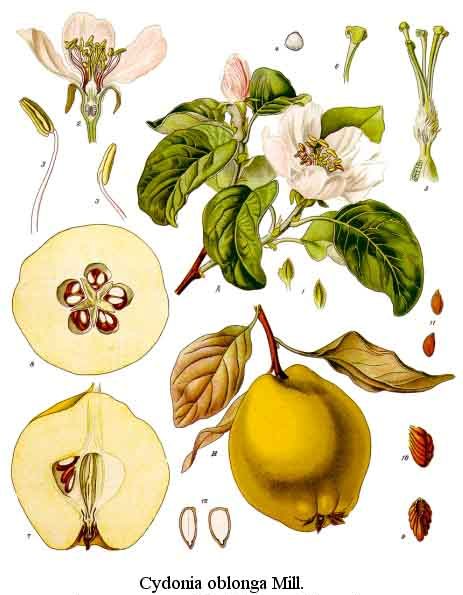
Just for you to know, the term "Marmelada" (marmalade), reffers to jam made with a fruit called "Marmelo". This fruit is no less than quince, and Marmelada is a thick jam that we make with it and sugar.

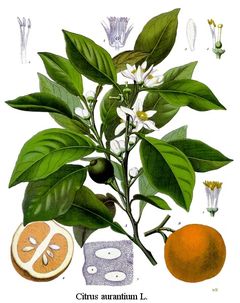
The orange marmalade was invented by a Scotish, James Keiller, and it consists of a orange sweet/ bitter jam.
I like this version, the one I usually make, my recipe, if there is such a notion any longer, no one invents nothing new any more, but I made it from reading and listening a lot and experimenting, so I guess it is a bit mine as well (be sure that all fruit is from biological agriculture):

3 kg of bitter oranges, Seville kind; 6 small lemmons; 3 kg of 1:1 gellifying sugar; 1 vanilla pod; 1 tb spoon of coriander seeds; 2 tb spoons of Apple pectine; mineral water;70 ml Gran Marnier liquer;35 ml Licor Beirão.

Extract the juices by hand, reserve all the pips.
Into the juices, pour mineral water so that you have a total of 7,5 litters of liquid.
With a fine vegetable knive, finelly slice the fruit chars and place them in the liquid. (hard work involved here!)
Keep in the fridge for 24 hours
Gently cook, inside a wide copper pan preferably, the fruit mix and liquid, with a split vanilla pod and the pips in a closed musselin bag, until it reduces to half of the amount.
Use a laddle to remove the scumm, from time to time.
Add the coriander seeds, after being a bit toasted and crushed, not burned!
Make sure to mix well with a spoon.
Using a big bowl, mix well the sugar and the extra apple pectine.
Add this mix to the pan and gently mix with a spoon or laddle, making sure that is it well dissolved.
When the temperature reaches 104ºC., remove from the heat source.
Wait 5 or 10 minutes to cool down a bit and add the liquers, mixing well and gently.
Remnove the vanilla pod if you want, but leave the coriander seeds. (It would be very difficult to remove them now, and they go very soft, with a citrus taste, its a curious tastefull effect.)
Pot the marmelade in sterilized air tight containers and take them to boilling water for 30 minutes to pasteurize. Lasts for 2 years in a dark, fresh place.

Terribly good with cheese, pancakes, baggette and butter or croissants and the morning coffee or tea!

If made with love then it tastes divinely... 0;-)

Chefs at Home

Having a party with your good friends? Would you like to spoil them with amazing food? Staying in the Algarve region in Portugal? Ask for Amazing Chefs at Home